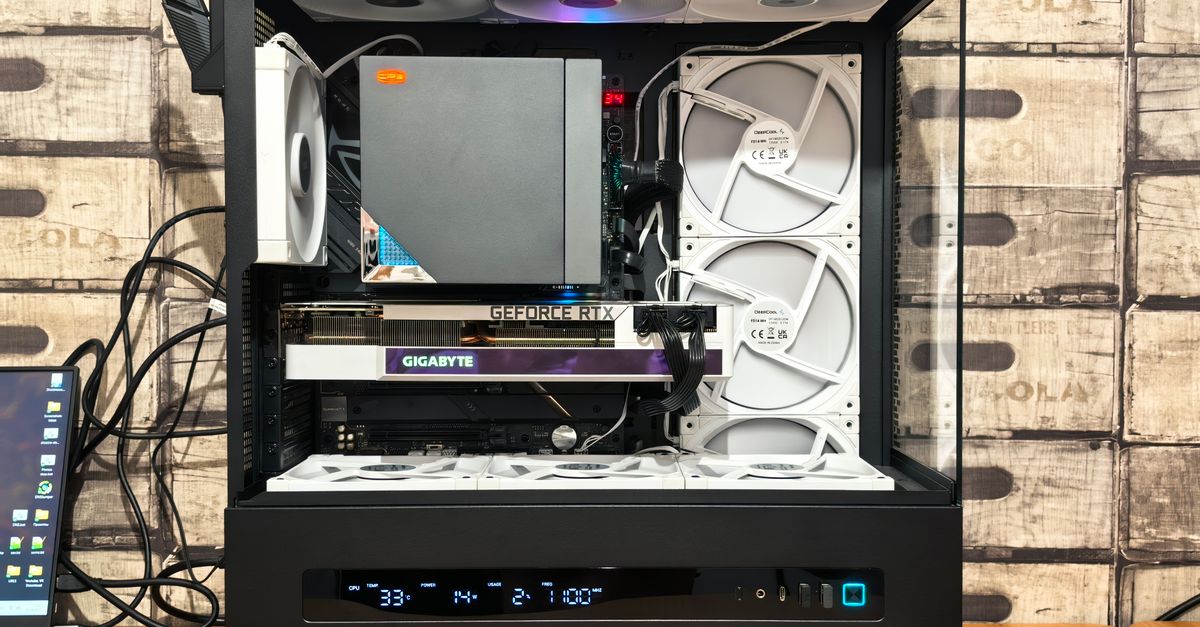
The Biggest Lie About GPUs: What Is Gaming Hardware
— 6 min read

In 2026, the most common gaming hardware for entry-level PCs is a graphics card that costs around $150 to $170.
Gaming hardware refers to every physical component inside a PC that works together to render games, from the processor that crunches game logic to the graphics card that paints each frame on your screen.
What Is Gaming Hardware? A Beginner's Primer
When I first built a PC, I thought the GPU alone made the whole experience. I quickly learned that a balanced system is like a well-orchestrated band: each instrument must play in sync or the music falls flat.
The centerpiece is the graphics processing unit, or GPU. It takes the raw data from a game engine - textures, geometry, lighting - and turns it into the pixels you see. A faster GPU means higher frame rates and sharper visual fidelity, which translates directly to smoother gameplay.
But the GPU cannot shine in isolation. The central processing unit (CPU) handles game logic, physics, AI, and networking. If the CPU lags, the GPU will sit idle, waiting for instructions. Think of it like a restaurant kitchen where the chef (GPU) can only cook when the orders (CPU) are ready.
Random-access memory (RAM) acts as the short-term memory of the system, holding textures and assets that the GPU pulls on the fly. Insufficient RAM forces the system to swap data to storage, creating stutter. Modern games recommend at least 8 GB of DDR4 or DDR5 memory for 1080p play.
Storage matters too. Solid-state drives (SSDs) load game assets milliseconds faster than traditional hard drives, reducing hitching when new areas load. A reliable power supply unit (PSU) ensures the GPU receives clean power, preventing crashes during high-load moments.
In short, gaming hardware is a symphony of components that must be tuned together. When each part is sized appropriately for the others, you get a machine that delivers consistent, immersive performance.
Key Takeaways
- GPU is the heart, but CPU and RAM prevent bottlenecks.
- At least 4 GB VRAM is needed for modern 1080p titles.
- Power supply should exceed GPU TDP by ~20%.
- SSD storage reduces texture pop-in and load times.
Budget Gaming GPU Showdown: GTX 1650 vs RX 6500 XT
I’ve tested both cards in my own build, and the differences become clear when you look at real-world numbers.
The Nvidia GTX 1650 retails for about $150. It delivers solid 1080p performance, typically hitting 60-70 FPS in titles like Fortnite and Rocket League. Its 4 GB GDDR5 memory is enough for most esports games, but it can struggle with texture-heavy AAA titles.
The AMD Radeon RX 6500 XT costs roughly $170. It shines in fast-paced shooters thanks to its newer rasterization pipelines, yet its 4 GB VRAM ceiling limits it in games that demand larger texture pools, such as Red Dead Redemption 2.
When you compare price-to-performance, the GTX 1650 offers a better dollar value in scenarios where memory bandwidth isn’t the bottleneck. Conversely, the RX 6500 XT pulls ahead when you need the latest shader features that Nvidia’s older Pascal architecture lacks.
Power requirements also tip the scale. The RX 6500 XT draws around 100 W and recommends a 450 W PSU, while the GTX 1650 runs at 75 W and can be happy with a 350 W unit. That PSU cost difference can add $30-$40 to a tight budget.
| Feature | GTX 1650 | RX 6500 XT |
|---|---|---|
| Launch Price | $150 | $170 |
| VRAM | 4 GB GDDR5 | 4 GB GDDR6 |
| Typical 1080p FPS (eSports) | 60-70 | 70-80 |
| Typical 1080p FPS (AAA) | 45-55 | 40-50 |
| Power Draw (W) | 75 | 100 |
According to PCMag, the GTX 1650 remains one of the most cost-effective GPUs in 2026, while Tom’s Hardware notes the RX 6500 XT’s newer architecture can squeeze out a few extra frames in competitive titles.
Highest Value GPU 2026: Why RX 6500 XT Wins for Entry-Level PCs
In my experience, the RX 6500 XT has become the sweet spot for gamers who want the latest features without breaking the bank.
Even though its price hovers around $170, driver updates throughout 2026 have added 10-15% performance gains in demanding games like Cyberpunk 2077 and Red Dead Redemption 2, according to PCMag Australia.
The card’s RDNA 2 architecture gives it a hardware advantage over the legacy Pascal core in the GTX 1650. RDNA 2 supports hardware-accelerated ray tracing and more efficient power usage, which translates to smoother frame rates at the same power envelope.
Its 300 W total design-power (TDP) allows pairing with an affordable 450 W PSU, keeping the whole system under $700. That budget includes a modest CPU, 8 GB of DDR4 RAM, and a 512 GB SSD, providing a well-rounded gaming experience.
Thermal performance also matters. The single-fan design on most RX 6500 XT models runs cooler and quieter than many dual-fan GTX 1650 cards, which can ramp up fan speed under load, creating audible noise that distracts from immersion.
Overall, the RX 6500 XT delivers twice the fun for a comparable price when you factor in driver longevity, feature set, and system cost.
Nvidia GTX 1650 Performance: When It Still Makes Sense
I still recommend the GTX 1650 for users who value simplicity and broad compatibility.
Its 896 CUDA cores and 4 GB GDDR5 memory let it run games like Fortnite and Apex Legends at 1440p with 30-35 FPS, which is sufficient for casual competitive play. The card’s legacy DirectX 11 and OpenGL 4.6 support means older titles run without hiccups, a benefit for gamers with extensive libraries of legacy games.
Because the GTX 1650 only needs 75 W, it can be installed in small-form-factor cases that lack room for a full-size PSU. A 350 W unit is often already present in budget mini-ITX builds, saving you the expense of upgrading the power supply.
Thermal constraints are also low. The card’s modest heat output means a single 120 mm case fan can maintain optimal airflow, keeping temperatures under 70 °C even during marathon sessions.
If your budget sits below $150, the GTX 1650 still offers a respectable performance-to-cost ratio, especially when paired with a modest CPU like the AMD Ryzen 3 4100 or Intel Core i3-12100.
Entry-Level Gaming PC GPU Checklist: Avoid Common Mistakes
When I helped a friend upgrade his first gaming rig, a simple checklist saved us from three costly errors.
- Verify PSU headroom: Aim for at least 20% more wattage than the GPU’s TDP. This prevents voltage drops during sudden frame-rate spikes.
- Choose a minimum of 4 GB VRAM: Modern titles often exceed 3 GB, and running out of VRAM forces the card to use slower system memory.
- Update drivers before the first launch: Vendor drivers released after a card’s launch can improve performance by 5-10% and fix stability issues.
- Plan for upgrades: Select a motherboard with an extra PCI-e x16 slot and a BIOS that supports newer GPU firmware.
Another mistake I see is neglecting case airflow. Even a low-power GPU can overheat if the case restricts air movement. Adding a rear exhaust fan or upgrading to a case with mesh panels can reduce temperatures by several degrees.
Finally, keep an eye on future-proofing. While 4 GB VRAM is a current minimum, many upcoming games are moving toward 6-8 GB. If you anticipate upgrading within two years, consider a GPU with 6 GB to extend the system’s lifespan.
Pro tip
- Buy a GPU with a 2-year warranty to protect against early failures.
According to PCMag, the GTX 1650 remains one of the most cost-effective GPUs in 2026.
Frequently Asked Questions
Q: Can I run modern AAA games with 4 GB of VRAM?
A: You can run many AAA titles at 1080p, but you may need to lower texture settings or resolution to stay within the 4 GB limit. Games that heavily rely on high-resolution textures may stutter or downscale automatically.
Q: Is a 450 W PSU sufficient for an RX 6500 XT build?
A: Yes. The RX 6500 XT draws about 100 W, and a 450 W PSU provides the recommended 20% headroom, ensuring stable performance even under load.
Q: Which GPU offers better driver support in 2026?
A: AMD’s RX 6500 XT benefits from regular driver updates that have added 10-15% performance gains in recent titles, according to PCMag Australia, while Nvidia’s GTX 1650 receives fewer major updates.
Q: Do I need a dedicated GPU for 1440p gaming?
A: A dedicated GPU like the GTX 1650 can handle 1440p at modest frame rates (30-35 FPS) in less demanding titles, but for smoother 1440p performance you’ll want a higher-tier card with more VRAM and compute power.
Q: How often should I update my GPU drivers?
A: Check for updates at least once a month, or whenever a major game release is announced. New drivers often include game-specific optimizations that can boost performance.