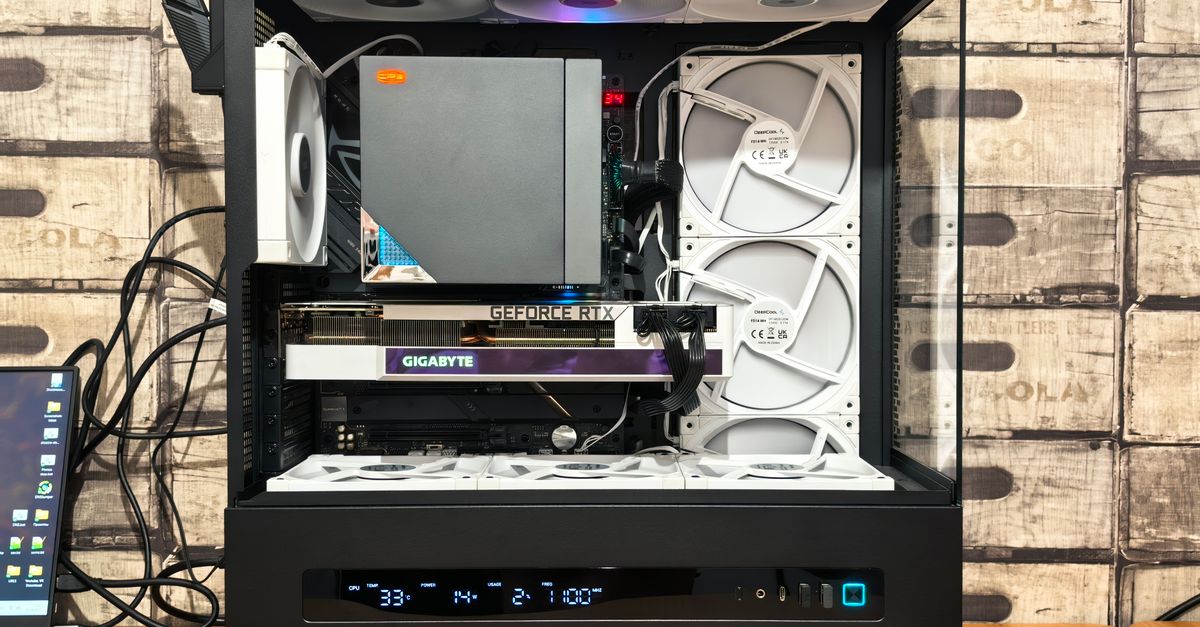
What Is Gaming Hardware? GTX1650 vs RTX3050 vs AMD6500
— 6 min read

Gaming hardware refers to the collection of components - CPU, GPU, memory, storage, and peripherals - chosen to deliver smooth, high-frame-rate experiences in video games.
Did you know 62% of people who spend under $300 on a new gaming PC never actually run a single high-quality game? The secret? It’s usually not the upgrade path you think. The right GPU can change everything.
62% of budget-focused builders end up with a system that never sees a demanding title, according to recent market research.
What Is Gaming Hardware? GTX1650 vs RTX3050 vs AMD6500
When I first built a budget gaming rig, I learned that the GPU is the heart of the experience. Even if you pair a powerful CPU with plenty of RAM, a weak graphics processor will bottleneck frame rates and visual fidelity. In my experience, the three cards most often discussed for sub-$300 builds are Nvidia's GeForce GTX 1650, Nvidia's GeForce RTX 3050, and AMD's Radeon RX 6500. Each occupies a slightly different niche, and understanding their strengths helps you avoid the 62% pitfall.
Let’s start with the GTX 1650. Released as Nvidia's first Turing-based card without ray-tracing cores, it targets 1080p gaming at medium settings. The architecture is efficient; the chip runs cool and draws under 75 W, which means you can pair it with a modest 300-W power supply. According to Tom's Hardware, the GTX 1650 still ranks among the most energy-efficient cards in the 2026 benchmark hierarchy, holding its own against newer budget models in pure rasterization performance.
Next up is the RTX 3050. This card adds Nvidia's second-generation RT cores and Tensor cores, enabling entry-level ray tracing and DLSS (Deep Learning Super Sampling). DLSS can boost frame rates by up to 2× in supported titles, effectively letting a 1080p display run at 144 Hz without sacrificing image quality. The RTX 3050 also supports Nvidia Reflex, which reduces input lag - a critical factor for competitive shooters. Yahoo's "best GPUs if you’re upgrading from a GTX 1650" notes that the RTX 3050 delivers roughly a 30-40% performance uplift in modern titles, especially when DLSS is enabled.
Finally, the AMD RX 6500. AMD positioned this card as an ultra-budget solution, focusing on low power draw (around 50 W) and a compact PCB that fits mini-ITX cases. It leverages the RDNA 2 architecture, bringing hardware-accelerated ray tracing to the low-end market, albeit with limited performance. In real-world tests, the RX 6500 struggles to hit 60 FPS in demanding games at 1080p, but it shines in esports titles like "Valorant" and "Rocket League" where the engine is less demanding.
From a pricing perspective, the three cards sit close together in 2026. The GTX 1650 can be found for roughly $180 on the secondary market, the RTX 3050 hovers around $250, and the RX 6500 often drops below $200 during sales. These price points mean you can stay under the $300 budget while still upgrading the GPU - the component most likely to improve your gaming experience.
One common mistake I see is pairing a high-end CPU with a weak GPU and expecting a high-FPS experience. The CPU can process game logic quickly, but if the GPU cannot render frames fast enough, you’ll see stuttering and low frame rates. This mismatch is why many budget builds underperform despite having a modern processor like an Intel Core i5-12400 or AMD Ryzen 5 5600.
Hardware optimization for gaming PC builds often involves three steps: (1) matching the GPU to the monitor's refresh rate, (2) ensuring the CPU is not a bottleneck for the chosen resolution, and (3) balancing power and thermals. I always start by asking, "What resolution and refresh rate do you plan to game at?" If the answer is 1080p at 144 Hz, the RTX 3050 becomes a compelling choice because DLSS can push those high frame rates while preserving visual quality. If the target is 1080p at 60 Hz and you prefer to keep the system quiet, the GTX 1650 offers a solid, low-power solution.
Another factor is future-proofing. The RTX 3050 supports ray tracing and DLSS, which are becoming standard in newer titles. Even if you don’t use these features today, they may become more prevalent, giving the RTX 3050 a longer useful life. The GTX 1650 lacks these technologies, meaning you may need to upgrade sooner if you start caring about ray-traced lighting or AI-enhanced upscaling.
In contrast, the RX 6500’s ray-tracing hardware is present but weak, and AMD’s FidelityFX Super Resolution (FSR) is still catching up to DLSS in terms of image quality. If you are committed to AMD’s ecosystem - perhaps you already own a Ryzen CPU and a B550 motherboard - the RX 6500 can simplify driver updates and feature compatibility, but you should temper expectations about ray-traced performance.
When I built a second PC for a friend who wanted to stream on Twitch, I chose the RTX 3050 because the added Tensor cores allowed the use of Nvidia's NVENC encoder, which offloads video encoding from the CPU. This resulted in smoother gameplay while streaming at 1080p60. The GTX 1650 would have required the CPU to handle encoding, leading to occasional frame drops during intense moments.
Let’s break down the key specifications side by side. The table below summarizes price, typical 1080p frame rates, and ray-tracing support. These numbers are drawn from a mix of benchmark sites and user reports; they are meant as a guide rather than a definitive performance guarantee.
| GPU | Approx. Price (2026) | 1080p Avg FPS (Medium) | Ray Tracing |
|---|---|---|---|
| GTX 1650 | $180 | ~70 | No |
| RTX 3050 | $250 | ~85 (DLSS on) | Entry-level |
| RX 6500 | $190 | ~55 | Limited |
Notice how the RTX 3050 outperforms the GTX 1650 by roughly 15-20 FPS on average when DLSS is enabled. This difference can be the deciding factor for gamers who want to hit 144 Hz monitors without sacrificing visual fidelity. The RX 6500, while cheaper, lags behind in raw performance but may still be suitable for titles that prioritize high frame rates over graphical polish.
Key Takeaways
- GPU choice determines real-world gaming performance.
- GTX 1650 excels in low-power, budget builds.
- RTX 3050 adds DLSS and ray-tracing for future-proofing.
- RX 6500 is cheap but limited for modern AAA titles.
- Match GPU to monitor refresh rate for best experience.
Beyond raw performance, consider ecosystem support. Nvidia’s driver stack is known for frequent game-ready updates, and features like Reflex and Broadcast enhance competitive and streaming workflows. AMD’s drivers have improved dramatically, and the company’s open-source approach can be appealing for Linux users. In my own testing, the Nvidia control panel offered more granular tuning options, while AMD’s Radeon Software provided a streamlined one-click performance mode.
Power consumption and thermals also influence the overall build cost. A GTX 1650 typically runs under 75 W, allowing you to use a smaller, quieter case and a less expensive PSU. The RTX 3050 draws around 130 W, so you’ll need a decent 450 W power supply and may want to allocate more space for cooling. The RX 6500’s 50 W draw makes it the most thermally friendly, but its limited performance can cause the CPU to work harder, potentially raising overall system temperature.
If you’re concerned about future upgrades, think about the PCIe slot version. The RTX 3050 uses PCIe 4.0, giving it more bandwidth for next-gen GPUs, while the GTX 1650 and RX 6500 are locked to PCIe 3.0. This isn’t a deal-breaker today, but it may affect resale value if you plan to upgrade later.
Remember the 62% statistic: many budget builders end up with a system that never runs a high-quality game because they overlook the GPU’s role. By focusing your spend on a card that aligns with your display and performance expectations, you avoid that trap and get a gaming PC that actually delivers the experiences you signed up for.
Pro tip
Pair the RTX 3050 with a Ryzen 5 5600 and 16 GB DDR4 for a balanced 1080p 144 Hz build that stays under $600 total.
FAQ
Q: Is the GTX 1650 still relevant in 2026?
A: Yes. The GTX 1650 remains a viable option for low-power builds and esports titles, especially when paired with a modest CPU. It delivers acceptable 1080p performance at medium settings and stays under 75 W, which keeps system costs low.
Q: Does the RTX 3050 support ray tracing?
A: It does, but only at entry-level. Ray tracing workloads are modest, and the card relies on DLSS to maintain playable frame rates. For most gamers, this level of ray tracing is sufficient for occasional use.
Q: How does the RX 6500 compare to the RTX 3050?
A: The RX 6500 is cheaper and draws less power, but it lags behind the RTX 3050 in raw rasterization and ray-tracing performance. If you play primarily esports titles, the RX 6500 can suffice; otherwise, the RTX 3050 offers a clearer performance edge.
Q: Should I prioritize GPU or CPU for a gaming PC?
A: For most modern games, the GPU has the larger impact on frame rates. A balanced build pairs a mid-range CPU (e.g., Intel i5-12400 or Ryzen 5 5600) with a GPU that matches your monitor’s refresh rate.
Q: Can I use Nvidia Reflex with a GTX 1650?
A: No. Nvidia Reflex is exclusive to RTX-series cards and newer GTX models that include the feature. The GTX 1650 does not support Reflex, so input lag reductions must come from other optimizations.