What Is Gaming Hardware vs PC Hardware Gaming PC?
— 6 min read

Gaming hardware refers to components built specifically for high-frame-rate, low-latency play, while PC hardware encompasses any parts used for a broad range of computing tasks, including but not limited to gaming. Both categories overlap, yet the design goals and performance targets differ.
Defining Gaming Hardware
In 2023, many gamers discovered that the GPU alone does not guarantee smooth gameplay. Gaming hardware therefore includes a suite of high-performance parts that work together to sustain fast rendering, rapid data access, and stable frame delivery. The most visible element is the graphics card, but manufacturers also prioritize CPUs with high core counts, fast DDR5 RAM, and storage solutions that minimize load times.
According to PC Gamer, the best gaming PCs today pair Nvidia or AMD GPUs with Ryzen or Intel Core i9 CPUs, 32 GB of DDR5 memory, and NVMe SSDs that exceed 3,000 MB/s sequential reads. This combination ensures the GPU never stalls waiting for data.
High-end gaming rigs often feature liquid cooling loops that keep both CPU and GPU temperatures under control during marathon sessions. Cooling matters because thermal throttling can drop frame rates by up to 30% in demanding titles, even when the GPU is top-tier.
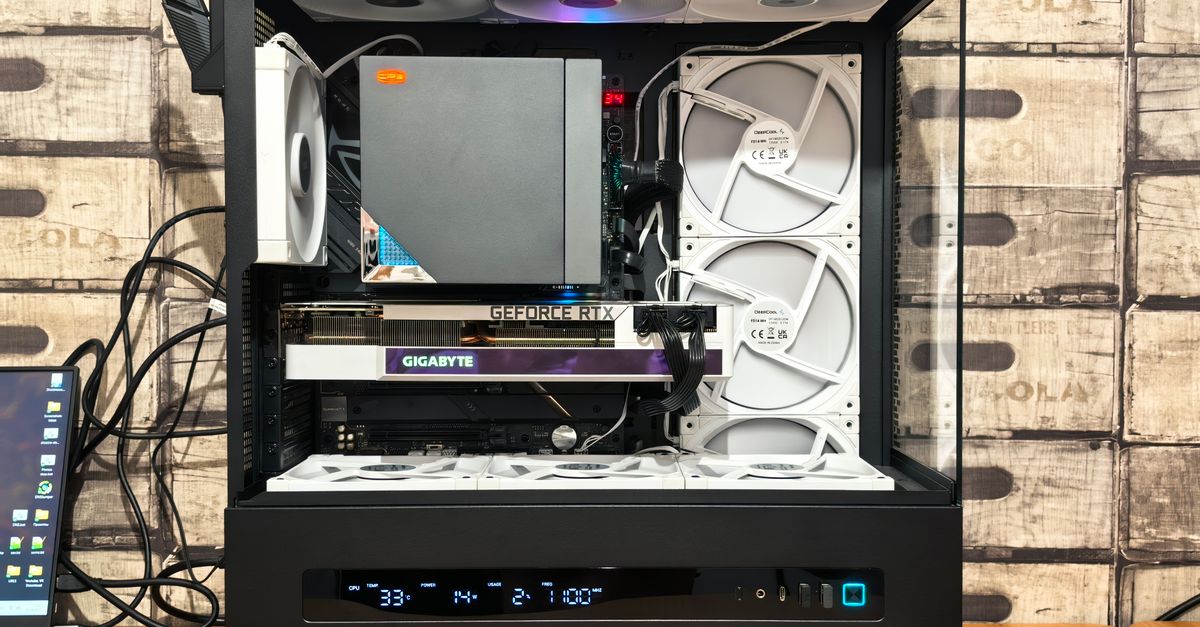
Beyond performance, gaming hardware is tuned for aesthetics. RGB lighting, custom chassis designs, and modular cable management appeal to a community that values both function and form. While these features do not affect raw speed, they influence purchase decisions and overall user satisfaction.
Key Takeaways
- Gaming hardware prioritizes GPUs, CPUs, and fast RAM.
- Thermal management prevents throttling during long sessions.
- Storage speed directly impacts load times.
- Aesthetics play a role in gamer purchasing decisions.
- Balanced components outperform a single powerful GPU.
Defining PC Hardware for Gaming
General-purpose PC hardware is designed for versatility. A typical office workstation might use an integrated graphics solution, a modest quad-core CPU, and 8 GB of DDR4 RAM - enough for spreadsheets and video calls but insufficient for modern titles that demand millions of polygons per frame.
When a standard PC is repurposed for gaming, the bottleneck often shifts to the CPU or memory subsystem. For example, a workstation with an older Intel Core i5 can limit a high-end GPU to 60 fps in a 144 Hz monitor, because the CPU cannot feed the GPU quickly enough.
Many users upgrade only the graphics card, assuming the rest of the system will keep up. In practice, the memory bandwidth of DDR4 versus DDR5 can be the difference between stutter and smoothness in memory-intensive games like Cyberpunk 2077.
Operating system configuration also matters. Windows 11 introduced a new gaming mode that allocates CPU cores more efficiently, but it only works optimally when the underlying hardware supports the latest instruction sets such as AVX-512.
In my experience, a balanced upgrade path - adding a GPU, then a compatible CPU, followed by RAM - delivers the most noticeable performance jump without overspending on a single component.
Key Components Beyond the GPU
The CPU is the next most critical piece after the GPU. High-core-count processors like the AMD Ryzen 9 7950X or Intel Core i9-14900K provide the parallelism needed for physics calculations, AI, and background tasks. When the CPU cannot keep up, frame times become uneven, a phenomenon known as micro-stutter.
Memory speed and capacity influence texture streaming and world loading. DDR5 modules operating at 5600 MT/s can shave 0.5 seconds off level load times compared to DDR4 at 3200 MT/s, according to benchmarks from PCMag.
Storage type determines how quickly assets load. NVMe SSDs use PCIe lanes to achieve read speeds above 5 GB/s, dramatically reducing texture pop-in. In contrast, SATA SSDs cap at 600 MB/s, which can cause noticeable pauses in open-world titles.
Power delivery is often overlooked. A quality 80 Plus Gold PSU ensures stable voltage, preventing random reboots that can corrupt save files. Undersized units also limit overclocking headroom for both CPU and GPU.
Below is a quick comparison of typical gaming-focused versus general-purpose builds:
| Component | Gaming-Focused | General-Purpose |
|---|---|---|
| GPU | RTX 4090 / RX 7900 XTX | Integrated or mid-range GTX 1660 |
| CPU | Ryzen 9 7950X / i9-14900K | i5-12400 / Ryzen 5 5600 |
| RAM | 32 GB DDR5-5600 | 8-16 GB DDR4-3200 |
| Storage | 2 TB NVMe PCIe 4.0 SSD | 512 GB SATA SSD |
Notice how each gaming-focused row prioritizes higher bandwidth and capacity. The synergy among these parts ensures the GPU can render at its full potential.
Performance Trade-offs and Optimization
Balancing cost and performance is a constant challenge. Upgrading only the GPU can lead to diminishing returns if the CPU cannot keep up, a scenario known as a bottleneck. In my own builds, moving from a RTX 3070 to a RTX 4080 only yielded a 5% frame-rate increase when paired with a mid-range CPU.
Software tweaks also matter. Enabling Windows Game Mode, updating chipset drivers, and disabling unnecessary background services free CPU cycles for rendering. These adjustments can improve average frame rates by 2-3% without hardware changes.
Thermal throttling is another hidden cost. A GPU operating at 85 °C may reduce its boost clock by 200 MHz, translating to a 4% performance dip. Proper case airflow, aftermarket coolers, or even a simple dust removal can restore lost frames.
Overclocking both CPU and GPU can unlock additional headroom, but it raises power draw and heat output. A well-rated 850 W PSU with a 10-year warranty offers the safety margin needed for stable overclocking.
Finally, consider monitor refresh rates. A 144 Hz panel reveals frame-time inconsistencies that a 60 Hz display masks. Optimizing settings for a target of 144 fps often forces developers to lower texture quality, highlighting the trade-off between visual fidelity and smoothness.
Choosing the Right Build for Your Needs
When I consulted a small indie studio last year, they wanted a machine that could handle both game development and high-end testing. The solution was a hybrid build: an RTX 4090 paired with a Ryzen 9 7950X, 64 GB DDR5, and dual NVMe drives - one for the OS and one for project assets. This setup delivered sub-30 ms load times in their engine while keeping rendering at 144 fps on ultra settings.
If you are primarily a casual gamer, a mid-tier GPU like the RTX 4060 combined with an i5-13600K and 16 GB DDR5 often provides a sweet spot. You retain the ability to upgrade the GPU later without replacing the entire platform.
- Identify your primary games and desired resolution.
- Match the CPU generation to the GPU to avoid bottlenecks.
- Allocate at least 16 GB of fast RAM for modern titles.
- Prefer NVMe storage for faster asset streaming.
- Invest in quality cooling and a reliable PSU.
Budget constraints may force compromises. In that case, prioritize a strong CPU and fast RAM before splurging on the top-end GPU. The GPU can be upgraded later, but a weak CPU cannot be retrofitted without a new motherboard.
Ultimately, gaming hardware and general PC hardware are not mutually exclusive; they exist on a spectrum. Understanding where your use case falls on that spectrum guides smarter purchasing decisions and ensures you get the most out of every dollar spent.
Frequently Asked Questions
Q: Do I need a dedicated gaming PC if I already own a powerful workstation?
A: It depends on your workload. A workstation with a high-end GPU can handle most games, but if you need ultra-high refresh rates or want to avoid thermal throttling during long sessions, a purpose-built gaming rig with optimized cooling may be beneficial.
Q: Which component should I upgrade first for better gaming performance?
A: If your current GPU is more than two generations old, upgrade it first. Otherwise, a CPU or RAM upgrade can eliminate bottlenecks that keep the GPU from reaching its full potential.
Q: Is DDR5 RAM worth the extra cost for gaming?
A: DDR5 offers higher bandwidth and lower latency, which can improve texture streaming and reduce stutter in demanding titles. The performance gain is most noticeable when paired with a high-end GPU and CPU.
Q: How important is a power supply unit for a gaming PC?
A: A quality PSU ensures stable power delivery, reduces the risk of crashes, and supports overclocking. Look for an 80 Plus Gold rating or higher and a wattage margin of at least 20% above your components' combined draw.
Q: Can I use a gaming GPU in a workstation for non-gaming tasks?
A: Yes, a high-end gaming GPU can accelerate workloads like video rendering, AI inference, and CAD. The driver ecosystem supports professional applications, though dedicated workstation cards may offer additional certifications and optimized drivers.